
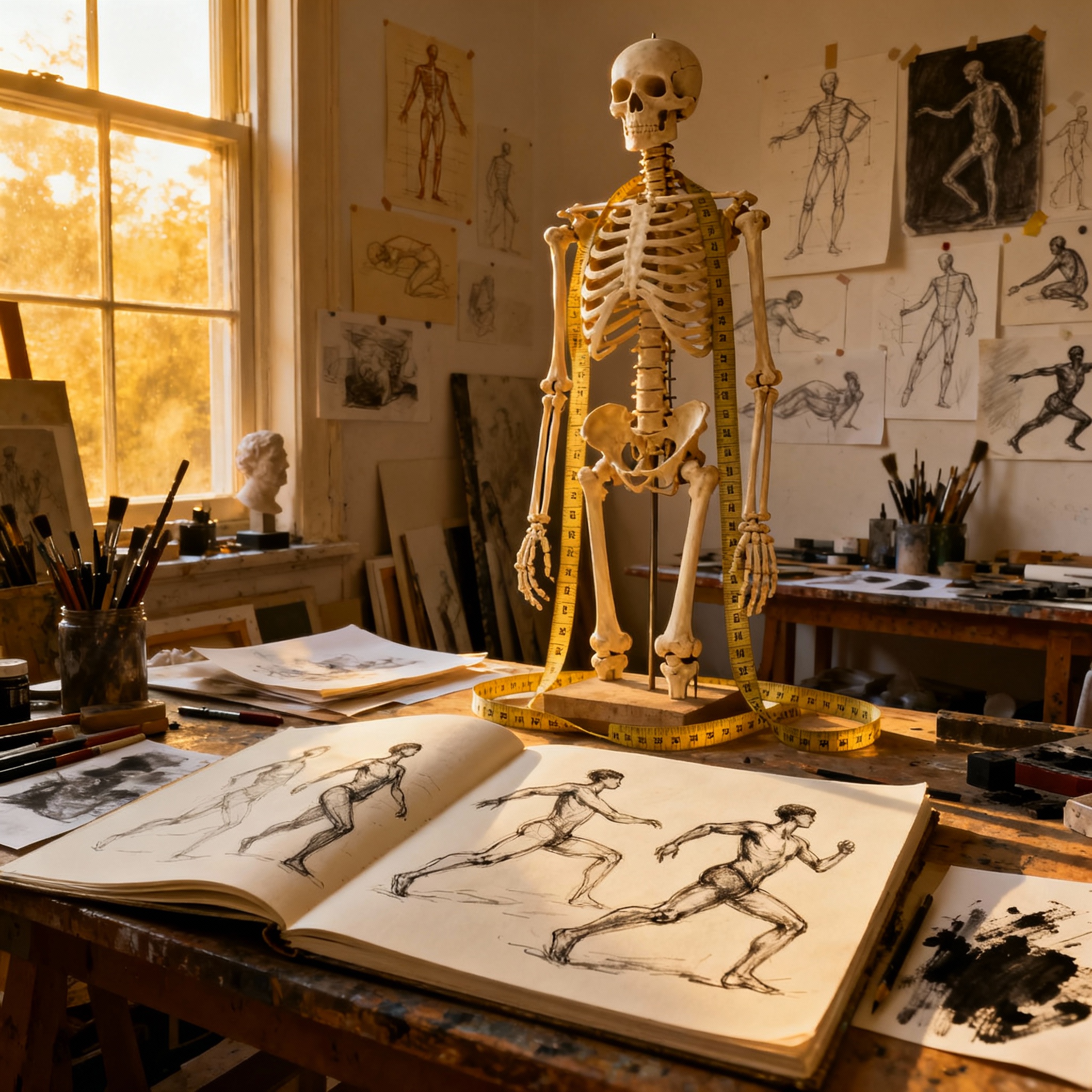
Study Anatomy: Learn the underlying bone and muscle structure. This helps you depict the body realistically and avoid distortions. Gesture Drawing: Start with quick sketches (30–60 seconds) to capture movement and posture rather than details. This builds fluidity. Proportions: Practice the classic “head-to-body” ratio (average adult figure is about 7–8 heads tall). Adjust depending on style.
It seems like you're sharing tips for improving figure drawing skills, which are great for artists looking to enhance their ability to depict the human body. Here’s a little more depth on each of these points:
Study Anatomy: Understanding the bone and muscle structure beneath the skin is crucial for creating realistic and compelling figures. By learning where bones and muscles are located, and how they move and influence the surface forms, you can improve your ability to depict the human body in a believable manner. Anatomical studies, including skeletal and musculature diagrams, can be incredibly beneficial. Consider using anatomy books specifically tailored for artists, or even attending life drawing classes if possible.
Gesture Drawing: The goal of gesture drawing is to capture the essence of a subject's movement and overall posture without getting bogged down in details. By using quick sketches (30-60 seconds), artists can develop their ability to convey dynamic poses and energy in their drawings. This practice encourages you to observe and understand the flow and motion in the figure, leading to more lively and expressive artwork.
Proportions: Knowing the basic proportion guidelines, such as the classic “head-to-body” ratio, provides a framework to ensure figures are proportionally accurate. The average adult figure is typically around 7–8 heads tall, but it's important to remember that different styles may call for adjustments. For instance, fashion illustrations might elongate bodies, while caricature might exaggerate features for effect. Practicing drawing with these proportions helps establish a solid foundation on which you can creatively build your unique style.
These elements together help artists build the skills needed to create realistic and stylized artwork, improving their overall technique.